The short answer
VPN Privacy Pricing Index 2026: the cheapest price is usually a financing decision.
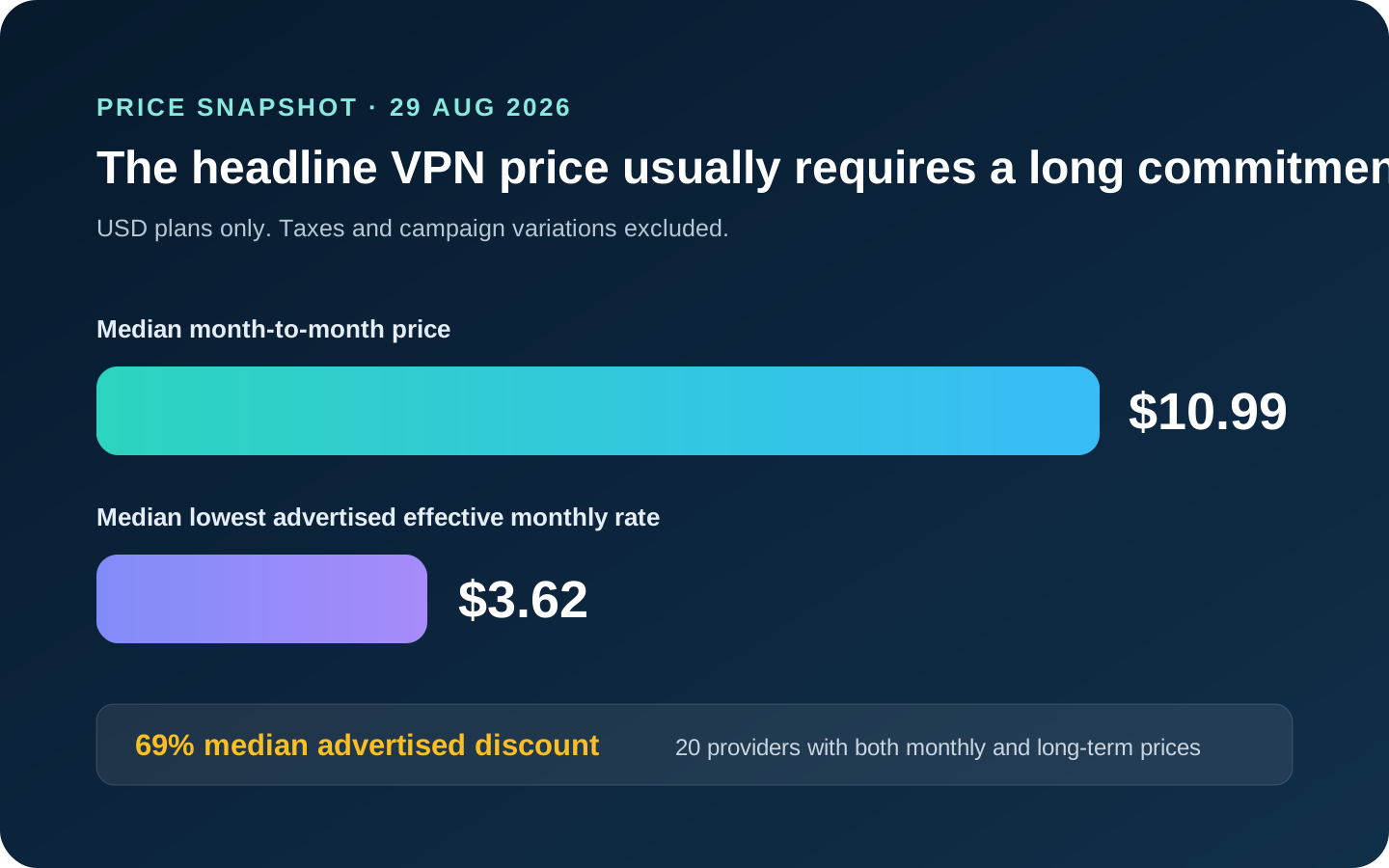
In our August 2026 snapshot of 30 consumer VPNs, the median month-to-month price among 20 USD plans was $10.99. The median lowest advertised rate among 26 USD plans was $3.62 per month—but the median required term was 24 months.
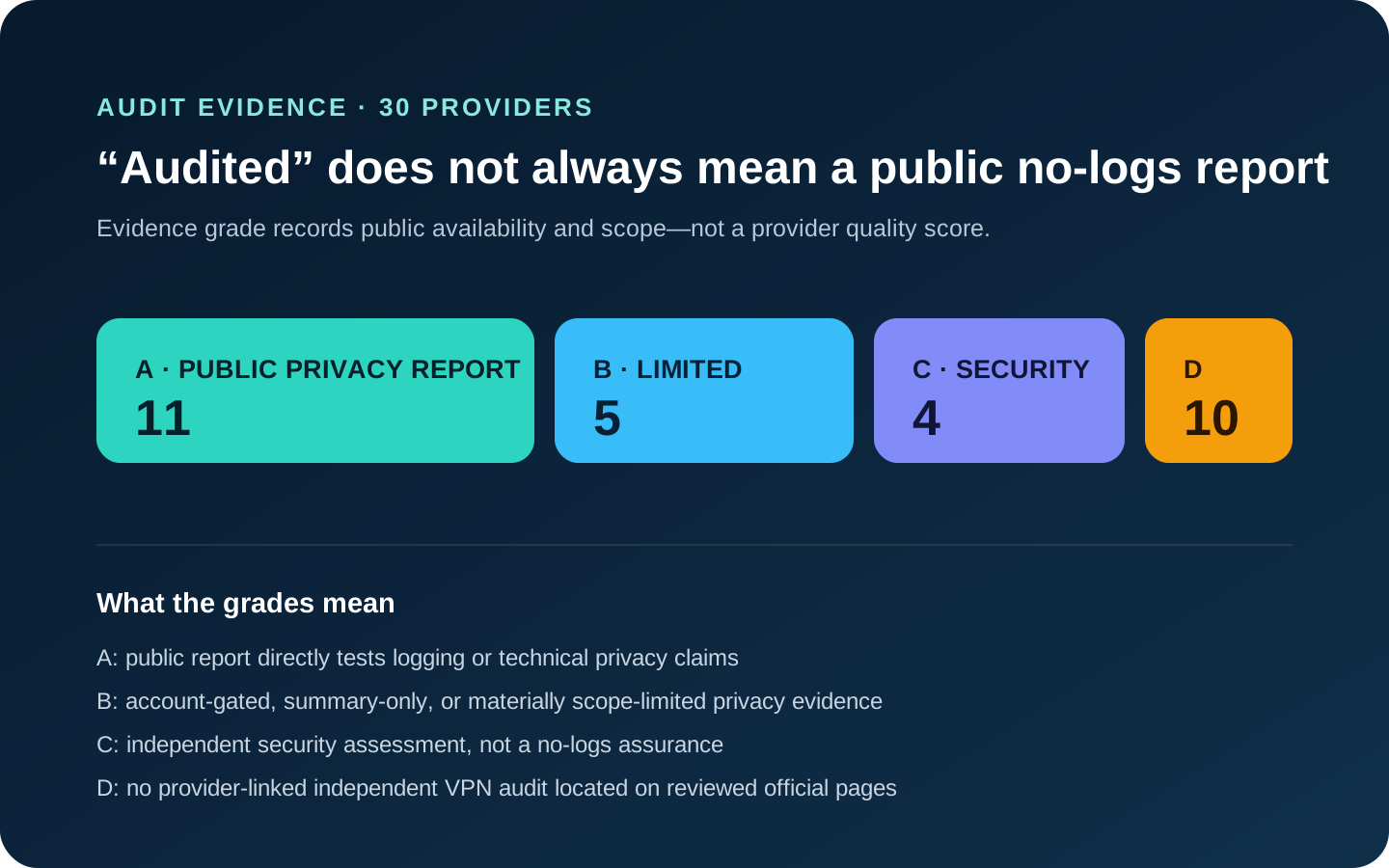
Privacy claims need the same unpacking. Eleven providers linked a public report or executive summary that directly assessed logging or technical privacy claims. Ten did not link an independent VPN audit from the official product, privacy or trust pages we reviewed. That does not prove those services are unsafe; it shows how much evidence a buyer can independently inspect.
This index compares pricing mechanics and public evidence. It does not score speed, streaming access, support or app quality, and it does not name an overall “best VPN.”
Executive summary
Five findings from the 2026 dataset
Every number below can be recalculated from the downloadable CSV.
Median month-to-month price across 20 USD plans.
Median lowest advertised rate across 26 USD plans.
Median advertised discount for 20 providers showing both rates.
Median required term among 25 measurable USD offers.
Providers with public Grade A logging or technical privacy evidence.
Snapshot date: August 29, 2026. Download the raw CSV or jump to the methodology.
Finding 1
The advertised VPN price gap is real—and mostly purchased with time
A “$3.49 per month” plan rarely means a $3.49 monthly charge.
The pricing pages in this index use two very different definitions of “monthly.” A month-to-month subscription is billed one month at a time and can usually be cancelled before the next monthly renewal. A long-term effective monthly rate divides a larger prepaid bill by the number of included months. Both numbers can be mathematically correct, but they represent different cash costs and different levels of commitment.
Among USD plans with an exposed month-to-month price, the median was $10.99. Across USD plans with a usable lowest advertised rate, the median was $3.62. For the 20 providers where both values were visible, the median advertised reduction was 69%. That is a meaningful discount, but it is not free: 15 of 25 measurable USD offers required at least 24 months.
How to read a VPN offer in ten seconds
- Find the total charged today, not only the large monthly equivalent.
- Count the paid months separately from “free” bonus months.
- Find the next renewal amount and renewal term.
- Set a reminder before the refund window and before auto-renewal.
Finding 2
Renewal transparency matters more than the size of the intro discount
The first bill can be precise while the second bill remains vague.
Ten of the 30 captured offers did not expose an exact, stable renewal amount in the reviewed public HTML. That group includes pages where the renewal amount was absent, campaign-dependent, dynamically rendered or not separately stated. A missing public value does not mean a provider will renew without notice. It means a reader cannot calculate the second-term cost from the page we were able to archive.
Several providers were unusually clear. NordVPN, ExpressVPN, CyberGhost, Private Internet Access, PureVPN, Avast, Norton, PrivateVPN, AVG and Panda displayed a numeric post-introductory price or standard comparison price. Mullvad, IVPN, Mozilla VPN, Brave, AzireVPN and DuckDuckGo used straightforward standard monthly or annual rates without a separately advertised first-term discount in the captured offer.
PrivateVPN illustrates why cadence matters as much as price: its reviewed offer charged $72 for the first 36 months, then stated $72 every 12 months. The number on the renewal bill is the same, but the covered period is not. Comparing only the dollar amount would miss a threefold increase in the effective monthly cost.
Campaigns also move. ExpressVPN’s checkout can serve different bonus-month and effective-rate combinations. Hotspot Shield showed standard and introductory variants. We recorded the exact offer visible on the snapshot date and labeled it as a campaign, rather than presenting it as a permanent price.
Finding 3
“Independently audited” is not one uniform claim
A security pentest, policy review and no-logs assurance engagement answer different questions.
We graded the availability and scope of evidence, not the overall privacy quality of each VPN. Grade A requires a public report or executive summary that directly assesses logging or technical privacy claims. Grade B covers evidence that is account-gated, provider-summary-only or materially limited in scope. Grade C means the provider publishes an independent security assessment, but the cited work is not a no-logs assurance. Grade D means we did not locate an official link to an independent VPN audit on the provider pages reviewed.
The strongest public examples let readers inspect the scope and limitations. Surfshark publishes its Deloitte ISAE 3000 report. Private Internet Access links its Deloitte no-logs assessment. hide.me publishes a Securitum executive summary, PureVPN publishes a KPMG technical privacy assessment letter, and DuckDuckGo links a 2026 no-logs policy audit.
Scope notes matter. Mullvad’s public relay assessment says no user-activity logging was found in the systems tested, but it also says the reviewers could not validate whether every production machine matched that setup. NordVPN reports repeated independent assurance engagements, but the full report requires a Nord Account. Those are useful signals; they are not equivalent to a fully public, production-wide guarantee.
An audit covers a defined period, sample and system scope. It cannot guarantee future configuration, employee behavior, every server or every privacy claim. Read the date, auditor, tested systems and limitations before treating an audit badge as evidence.
The dataset
VPN Privacy & Pricing Index 2026: all 30 providers
Prices are the offers captured for a new customer. “Lowest” means the lowest effective monthly rate for a full consumer VPN plan, excluding lifetime, free, add-on and business plans.
| Provider | Monthly | Lowest advertised | Required term | Upfront | Renewal note | Audit evidence |
|---|---|---|---|---|---|---|
| NordVPN | $14.99 | $3.49/mo | 27 mo | $94.23 | $139.08/year | B Account-gated report |
| ExpressVPN | $12.99 | $3.49/mo | 28 mo | $97.72 | $99.95/year | A Public trust reports |
| Surfshark | $15.45 | $2.49/mo | 24 mo | $59.76* | Not exposed | A Public no-logs report |
| Proton VPN | Dynamic | Dynamic | — | — | Dynamic HTML | A Public no-logs evidence |
| CyberGhost | $12.99 | $2.19/mo | 26 mo | $56.94 | $56.94/year | A Public no-logs report |
| Private Internet Access | $11.99 | $2.03/mo | 28 mo | $56.94 | $56.94/year | A Public no-logs report |
| Mullvad VPN | €5.00 | €5.00/mo | 1 mo | €5.00 | Flat price | B Scope-limited relay review |
| Windscribe | $9.00 | $5.75/mo | 12 mo | $69.00 | Standard rate | C Security evidence |
| Hotspot Shield | $12.99 | $7.99/mo | 12 mo | $95.88 | Offer-dependent | B Policy review summary |
| hide.me | £11.99 | £2.59/mo | 27 mo | £69.99 | Same every 27 mo | A Public no-logs report |
| PureVPN | $12.95 | $2.15/mo | 27 mo | $58.20 | $47.95/year | A Public privacy letter |
| IVPN | $6.00 | $5.00/mo | 12 mo | $60.00 | Standard rate | C Security assessment |
| Mozilla VPN | $9.99 | $4.99/mo | 12 mo | $59.88 | Standard rate | C App security audit |
| Avast SecureLine | — | $3.99/mo | 24 mo | $95.76* | $99.99/year | D No official audit link found |
| Norton VPN | — | $3.33/mo | 12 mo | $39.99 | $79.99/year | A Public privacy assessment |
| F-Secure VPN | — | $5.83/mo | 12 mo | $69.99 | Not exposed | D No official audit link found |
| OVPN | $12.00 | $4.22/mo | 36 mo | $151.92* | Standard rate | D No official audit link found |
| TorGuard | $10.99 | $10.99/mo | 1 mo | $10.99 | Long term unclear | D No official audit link found |
| PrivateVPN | $9.90 | $2.00/mo | 36 mo | $72.00 | $72 every 12 mo | D No official audit link found |
| ZoogVPN | $9.99 | $2.49/mo | 27 mo | $59.99 | Not exposed | D No official audit link found |
| Astrill VPN | $30.00 | $12.50/mo | 24 mo | $300.00 | Standard rate | B Provider audit statement |
| FastestVPN | $5.00 | $0.83/mo | 24 mo | $19.95 | Not exposed | B Certification claim |
| VPN Unlimited | $9.99 | $4.50/mo | 36 mo | $161.99 | Not separate | D No official audit link found |
| PrivadoVPN | $10.99 | $1.11/mo | 27 mo | $29.97* | Not exposed | D No official audit link found |
| TunnelBear | — | From $3.33/mo | — | — | Incomplete HTML | C Annual security audits |
| AVG Secure VPN | — | $3.75/mo | 36 mo | $134.99 | $99.99/year | D No official audit link found |
| Panda Dome VPN | — | $2.50/mo | 12 mo | $29.99 | $49.99/year | D No official audit link found |
| Brave VPN | $9.99 | $8.33/mo | 12 mo | $99.99 | Standard rate | A Public no-logs evidence |
| AzireVPN | €5.00 | €3.75/mo | 12 mo | €45.00 | Standard rate | A Public no-logs evidence |
| DuckDuckGo Plus | $9.99 | $8.33/mo | 12 mo | $99.99 | Standard rate | A Public no-logs report |
* Calculated from the provider’s displayed effective monthly rate when the captured page did not expose a separate upfront total. EUR and GBP plans are excluded from USD aggregates. A dash means the value was not exposed or not comparable—not zero.
How to use it
The cheapest plan and the lowest-risk purchase are not always the same
The dataset is most useful as a filter, not as an automatic winner picker.
Choose flexibility first
If you are new to VPNs, travel occasionally or need a service for one project, compare the real month-to-month price. A $10 plan for two months can cost less than a $60 “$2.49 per month” deal you stop using after a week.
Choose evidence first
If privacy claims drive your decision, open the audit link. Check whether it examines production infrastructure, source code, a policy document or a small server sample. Look for the date and unresolved limitations.
Choose renewal clarity first
If you do accept a long term, calculate the second term before buying. Record the renewal amount, renewal cadence, cancellation deadline and refund period in a calendar entry.
Flat pricing makes the trade-off easier to understand. Mullvad charged €5 for one month without a long-term discount. IVPN Standard was $6 monthly or $60 yearly, a modest 16.7% reduction. Brave VPN and DuckDuckGo Plus each showed $9.99 monthly or $99.99 yearly. These are not automatically better services, but their price presentation requires less interpretation.
Deep-discount plans can still be rational when you already know the product and the total bill fits your budget. The mistake is treating an effective monthly number as though it were a cancel-any-month subscription. Use the refund window for validation, then set a renewal reminder immediately.
For buying guides based on other needs, browse our VPN guides and VPN privacy guides. Our editorial methodology explains how we separate evidence from commercial relationships, and our affiliate disclosure explains how the site is funded.
What price cannot tell you
A transparent price is useful, but it is not a complete VPN evaluation
This index deliberately keeps commercial facts separate from performance claims.
A VPN can have a low price and still be the wrong purchase for your network, devices or threat model. Server proximity affects latency. Protocol support can decide whether a connection works on a restrictive school, office or hotel network. Kill-switch behavior matters when Wi-Fi drops. App accessibility and support quality matter when something breaks. None of those qualities can be inferred from a checkout page, so they are not folded into a synthetic score here.
Audit evidence also needs context beyond its grade. A provider may publish excellent application security work while offering no public no-logs assurance. Another may commission a privacy assessment that covers a sample of infrastructure at one point in time. Open-source apps, transparency reports, warrant canaries, legal cases, ownership and the personal data required at signup can add useful evidence, but each answers a different question. Combining them into one “privacy score” would create a precision the underlying evidence does not support.
Finally, the lowest plan may bundle something you do not need. DuckDuckGo Plus includes other privacy services; Brave VPN requires the Brave browser; Norton, AVG, Avast, F-Secure and Panda operate inside broader security-product ecosystems. Bundle value depends on whether you would otherwise buy those tools. This table normalizes the price mechanics as far as the public offer allows, but it does not pretend every product is functionally identical.
Use the index to remove surprises, then evaluate the remaining shortlist against your own requirements. Test the exact apps and nearby servers during the refund period. Confirm that the service supports every required device and protocol. If a feature is essential, verify it on the provider’s current documentation before committing to a multi-year term.
Buyer checklist
Seven questions to ask before paying
- 1
What is charged today?
Ignore the monthly equivalent until you find the actual upfront amount.
- 2
How many paid months?
Separate paid months from promotional bonus months so offers remain comparable.
- 3
What happens at renewal?
Record both the next amount and the period it covers.
- 4
Can I inspect the audit?
A badge is less useful than a dated report with a named auditor and scope.
- 5
Does the audit test no-logs?
An app pentest can improve security without validating server logging practices.
- 6
Does the plan fit my devices?
A lower price can disappear if you need another account for extra devices.
- 7
When does the refund window close?
Test the apps, local servers and required features before that date.
FAQ
VPN pricing and privacy audit questions
How much does a VPN cost per month in 2026?
The median month-to-month price in this index was $10.99 across 20 USD plans. The median lowest advertised effective monthly rate was $3.62 across 26 USD plans, usually with annual or multi-year prepayment.
Why are advertised VPN prices so much lower than monthly prices?
The lowest headline price is normally a monthly equivalent for a prepaid annual or multi-year term. Among 20 providers with both values, the median advertised discount was 69%. Among 25 measurable USD offers, 15 required at least 24 months.
Does an independent audit prove a VPN keeps no logs?
No. An audit is a point-in-time assessment limited to the stated systems, sample, period and procedures. A public report is stronger evidence than an unsupported claim, but it is not a permanent guarantee.
Which VPNs have public no-logs audit evidence?
Eleven of 30 providers in this snapshot linked a public report or executive summary that directly assessed logging or technical privacy claims. The table and downloadable CSV identify the source and scope. Some other providers publish security audits that do not specifically validate no-logs claims.
How often will this index be updated?
QuickVPNs plans a quarterly price check and an immediate correction when a cited source materially changes. Each release keeps a dated CSV so older findings remain reproducible instead of being silently rewritten.
Methodology
How we built the index
Universe. We selected 30 consumer VPN services with active provider-owned pricing pages available to US or international English-language buyers. The sample includes large multi-product brands, independent privacy-focused services and browser or security-suite VPNs. It is a market sample, not a census of every VPN.
Price capture. We recorded the least expensive full consumer VPN plan displayed to a new customer, plus its month-to-month price when visible, lowest effective monthly rate, required term, upfront payment and renewal language. We excluded lifetime plans, free plans, business plans, add-ons and limited-data tiers. Prices were checked on August 29, 2026.
Dynamic values. If a provider’s public HTML did not expose a verifiable number, we left the field blank. We did not copy a stale figure from an affiliate site. That is why Proton VPN remains in the evidence comparison but is excluded from numeric price aggregates.
Currencies. We did not convert currencies. USD medians use USD rows only. Mullvad and AzireVPN were displayed in EUR, while hide.me was displayed in GBP; their original values remain in the table and CSV.
Discount calculation. For each USD provider with both a month-to-month price and lowest advertised rate, we calculated (monthly price − lowest rate) ÷ monthly price. The reported 69% figure is the median of 20 provider-level discounts, not the difference between two unmatched medians.
Audit evidence. We reviewed provider-owned product, privacy, transparency, security or trust pages for a linked independent assessment. Grade A requires a public report or executive summary directly assessing logging or technical privacy claims. Grade B is account-gated, summary-only or materially scope-limited privacy evidence. Grade C is an independent security assessment that does not serve as a no-logs assurance. Grade D means no provider-linked independent VPN audit was located on the pages reviewed.
Limitations. Offers can vary by location, tax, device, cookies and campaign. Audits have dates and defined scopes. Grade D does not prove an audit never occurred. The index does not measure speed, reliability, streaming access, customer support or usability. It should not be used as a complete VPN recommendation by itself.
Corrections and reuse. Publishers may cite the findings with attribution and a link to this page. For calculations or charts, use the dated CSV. To report a changed price or evidence link, contact the QuickVPNs editorial team and include the provider URL and capture date.