free VPN vs paid VPN: quick answer
Quick answer: Ask one question first — how does this free VPN make money? Running a global server network costs real money every month. If a provider isn't charging you and can't clearly explain who is paying, then you're not the customer. There is one well-documented exception, Proton VPN's free plan, and it's worth installing even if you subscribe elsewhere. Almost everything else in the free VPN category is either advertising, data collection, or a limit so tight it's really a trial.
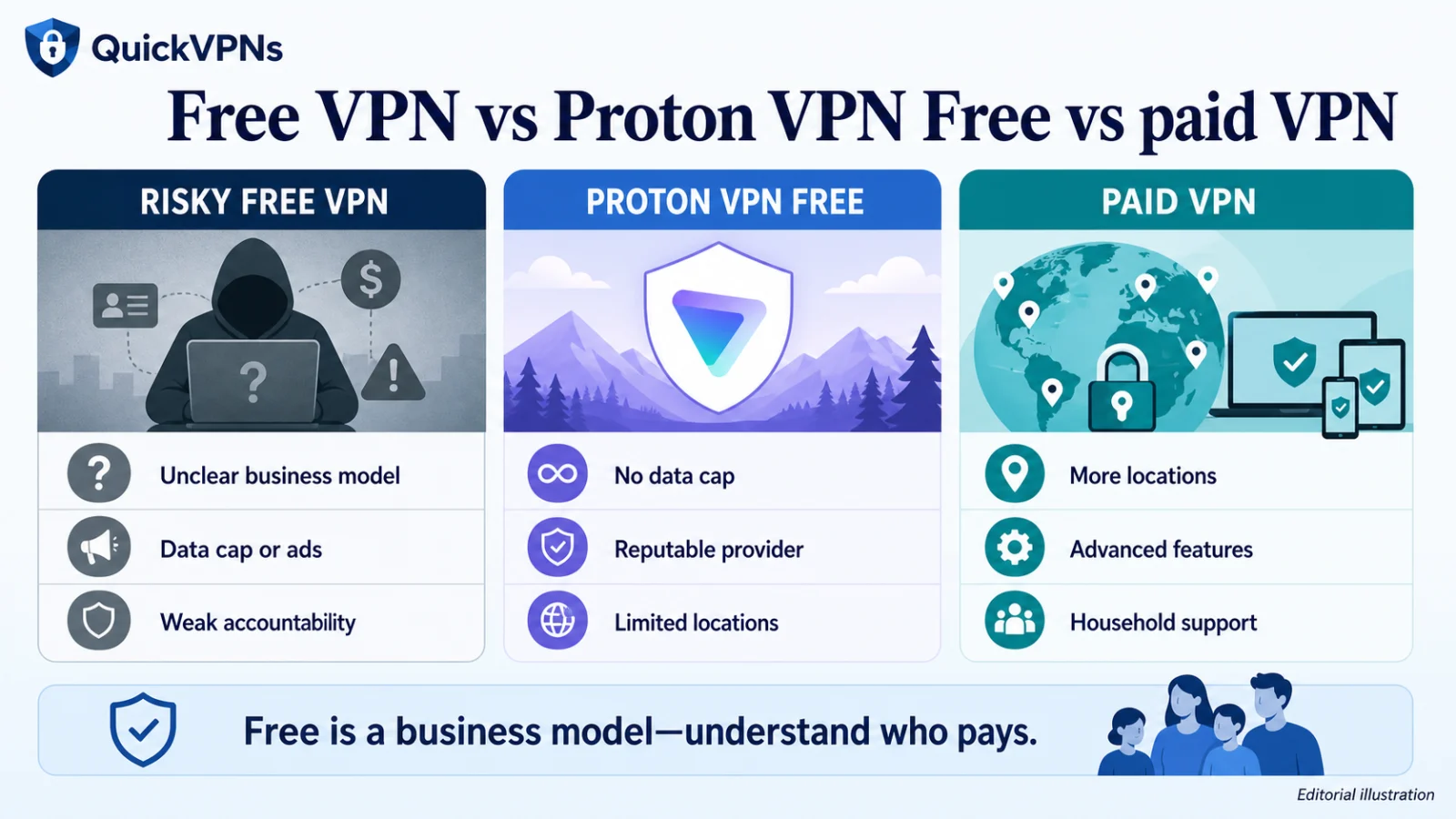
Free VPN vs paid VPN at a glance
| Typical free VPN | Proton VPN Free | Paid VPN | |
|---|---|---|---|
| Data cap | Usually yes | None | None |
| Speed throttling | Common | None | None |
| Ads in the app | Common | None | None |
| Activity logging | Often, and monetised | None, audited | None, if audited |
| Devices | 1 | 1 | 5–10, or unlimited |
| Server countries | 1–5 | 5 | 100–140+ |
| Independent audit | Rare | Yes, 5 consecutive | Varies — check |
| Streaming | Rarely works | Not supported on free | Sometimes |
| Anti-censorship tools | Rare | Stealth included | Usually |
| Who pays for it | Advertisers or data buyers | Proton's paying subscribers | You |
Compare the provider options
Use the current plan pages for live terms; the trade-offs below are the stable decision points.
NordVPN
- Strong support for restrictive networks
- Broad server and TV-device coverage
- Ten simultaneous device connections
Surfshark
- Unlimited simultaneous device connections
- Strong value for households
- Some features differ by platform
Proton VPN
- Open-source apps and published privacy evidence
- Privacy-focused free and paid options
- Advanced features depend on the plan
Start here: how does a free VPN make money?
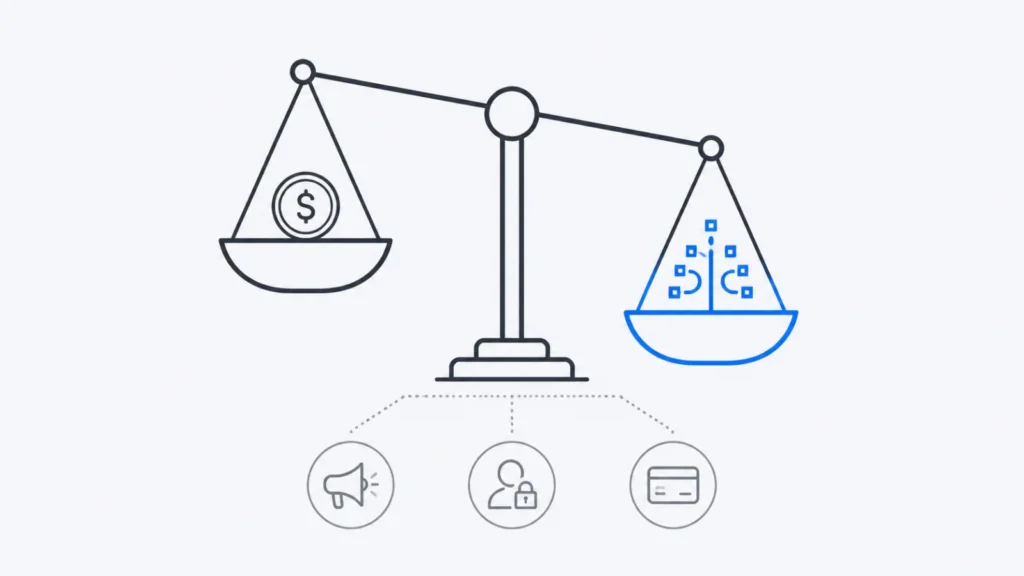
A VPN provider runs servers in dozens of countries, pays for bandwidth, employs engineers and handles support. That's a substantial recurring cost. If you're not paying it, someone is — and the honest way to evaluate any free VPN is to find out who.
There are four realistic answers.
1. Advertising inside the app. Annoying, but at least it's visible and the incentive is obvious.
2. Selling or sharing user data. The one that defeats the purpose entirely. A VPN sits between you and everything you do online — it is the single best position from which to build a browsing profile. A provider that monetises data has taken the exact position you were trying to protect. Some free VPNs have been caught doing this; the business model makes it structurally tempting.
3. Converting you to paid. A free tier that's a trial with a cap. Honest enough, if the limits are stated clearly.
4. Subsidy from a paid business. The provider has enough paying customers to carry free users as a public good or a marketing cost. Rare, and it requires a substantial paid business to sustain.
If you can't determine which of these applies, assume the second. That's not cynicism — it's the default outcome when a costly service is given away without explanation.
The one free VPN worth installing
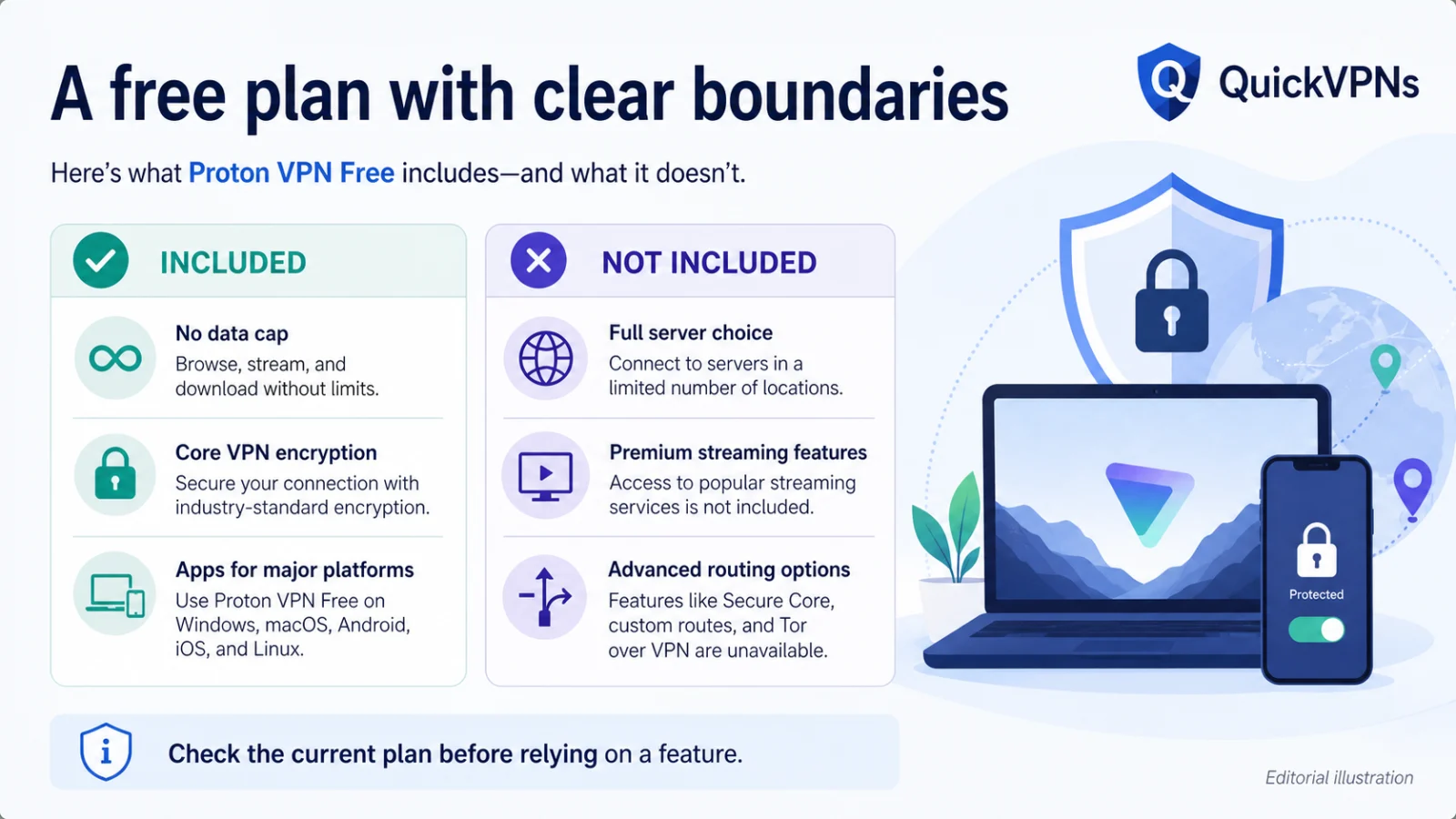
Proton VPN Free is category four, and it's documented rather than merely claimed.
No data cap. No ads. No speed throttling. No activity logging. It's the only major free VPN that can state all four, and the funding model is explicit: paid Proton subscriptions across the Mail, Drive, Pass and VPN suite carry the free tier. Proton's origins are in a research and privacy-advocacy context rather than an advertising one, and the free tier has always been framed as part of that mission.
The claim isn't self-certified either. Proton VPN has passed five consecutive annual no-logs audits by Securitum with the full reports published, and its apps are open source on every platform — so the software making the promise can be read by anyone. There's also a transparency report with a warrant canary.
The limits are real, and stated plainly:
- One device at a time
- Servers in a small set of countries rather than the full 140+ network
- No streaming support on the free tier
- No Secure Core, no NetShield on free
But it does include Stealth, the anti-censorship protocol — which matters enormously, because someone in a country that blocks VPNs may also be unable to complete a payment. Free obfuscation is a meaningful public good, and almost nobody else offers it.
What free VPNs cost you instead of money
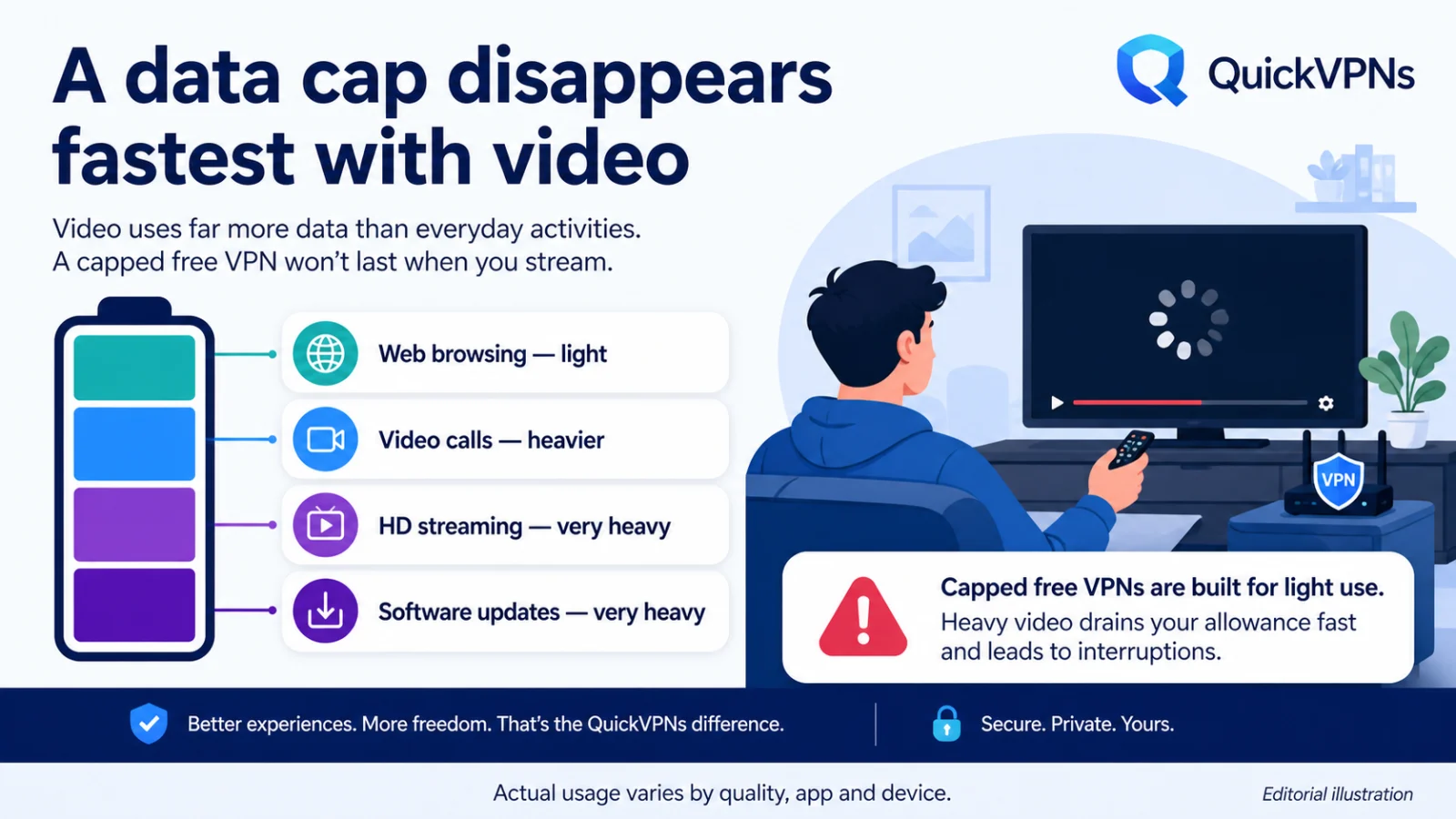
Beyond the data question, the practical limits matter more than people expect.
Data caps. Many free tiers offer 500 MB to 10 GB a month. Streaming a single film can exceed that. In practice, a capped VPN gets switched off — and a VPN you've switched off protects nothing.
Speed throttling. Free users are routinely deprioritised. That's a defensible business decision, and it also makes the service unusable for calls or video.
One or two server countries. Fine if you only want encryption on café Wi-Fi. Useless if you need a specific location.
Ads in a privacy product. Advertising requires targeting, targeting requires data. The tension is structural, not incidental.
No audit. Almost no free VPN has submitted to an independent no-logs assurance engagement. Without one, the no-logs claim is a marketing statement — and free VPNs are exactly where you'd most want it verified.
Browser extension confusion. Many "free VPNs" in browser stores are proxies, not VPNs: they cover browser traffic only, leave every other app exposed, and have been a recurring source of malicious extensions.
What paying actually buys you
Not encryption — free and paid providers use the same ciphers. Five other things.
Accountability. A paying customer is a customer. The provider's incentive is to keep you subscribed, which means not doing anything you'd be angry to discover.
Independent verification. The major paid providers submit to annual audits: six for NordVPN, five consecutive for Proton VPN, two for Surfshark with the full ISAE 3000 report published. That external check is the main thing your money buys.
Devices. Free tiers give you one. Paid plans give you 5–10, or unlimited with Surfshark — the difference between protecting your phone and protecting your household.
Network size and features. 100–140+ countries instead of a handful, plus kill switch reliability, split tunnelling, malicious-domain blocking, and obfuscation that works on hostile networks.
Support. When a VPN breaks on a hotel network at midnight, a free product has no obligation to help you.
When free is genuinely enough
Not everyone needs to pay, and pretending otherwise would be selling.
Free is enough if:
- You want protection on café Wi-Fi occasionally, on one device
- You need a backup alongside a paid service — the failure mode that strands people is your primary app being blocked with no fallback installed
- You're testing whether a VPN fits your life before committing money
- Cost is a genuine barrier and the alternative is no VPN at all
Pay if:
- You need to cover more than one device
- You need a specific country, or a wide choice of them
- You use a VPN daily rather than occasionally
- You're travelling somewhere that filters the internet and need reliable obfuscation
- Streaming matters to you — free tiers don't support it
- You want the no-logs claim externally verified
The strongest argument in this whole comparison
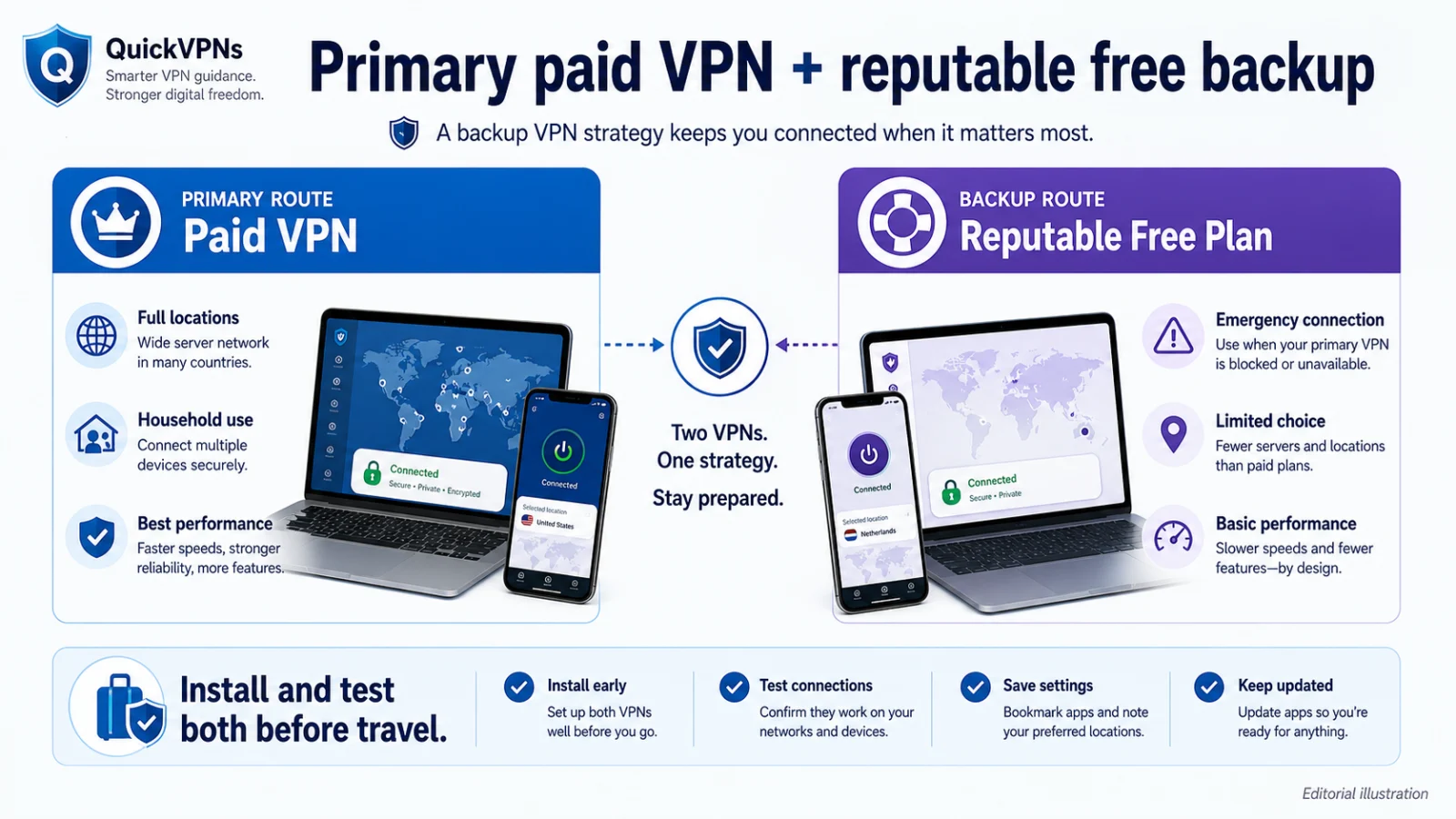
Install both.
A paid provider as your primary, Proton VPN Free on a second device as a fallback. It costs nothing extra and it covers the scenario that actually leaves people unprotected: your main app gets blocked at your destination, or your subscription lapses mid-trip, and you have no way to download an alternative because the app store or provider site is inaccessible.
Ten minutes of setup before you travel. No recurring cost. It's the highest-value thing in this article.
Which paid VPN, if you decide to pay?
| Your situation | Pick |
|---|---|
| One device, occasional use | Proton VPN Free — don't pay yet |
| Privacy is the actual reason | Proton VPN — open source, five audits, Swiss |
| Covering a household | Surfshark — unlimited devices, lowest cost |
| Travelling to restrictive countries | NordVPN — strongest obfuscation record |
| Streaming with minimal effort | NordVPN — SmartPlay and TV apps |
All three offer a 30-day money-back guarantee. Treat it as a test window: run a DNS leak test, drop your Wi-Fi to check the kill switch, connect every device, and contact support once with a real question.
Full details in our best VPN services shortlist.
Final verdict: free or paid?
Free VPNs are not automatically bad — but the category is bad on average, and the reason is the business model rather than bad intentions. A costly service given away for nothing is being paid for somewhere, and in a product that sits between you and your entire internet connection, that's worth establishing before you install it.
Proton VPN Free is the exception, and it's a real one: funded transparently, audited five years running, open source, and generous enough to be genuinely useful rather than a teaser. If you need one device protected on public Wi-Fi occasionally, install it and don't spend money.
Pay when the limits actually bind — more devices, more countries, daily use, censorship circumvention, streaming, or wanting the no-logs claim externally verified. And whichever you choose, keep a free fallback installed. That's the piece of advice most likely to matter on the day something goes wrong.
Our recommendation: Start with Proton VPN Free. If you outgrow it, Surfshark for households and NordVPN for travel and streaming.
How we evaluated free VPN vs paid VPN
QuickVPNs compared the documented features that change the reader’s outcome, checked current Provider Hub sources, removed volatile price claims, and stated limitations alongside strengths. No provider can buy a ranking.
| Criterion | What we checked |
|---|---|
| Evidence | Current official documentation and independent assurance material where available |
| Real-world fit | Devices, network conditions, setup effort, and meaningful limitations |
| Value | Coverage and durable features, not a temporary introductory price |
free VPN vs paid VPN FAQ
Are free VPNs safe?
Most aren't, and the reason is structural rather than malicious: running a global server network is expensive, so a provider giving it away is usually monetising something else — typically advertising or user data. The main exception is Proton VPN Free, which is funded by paid Proton subscriptions and has passed five consecutive independent no-logs audits.
What is the best free VPN?
Proton VPN Free, by a clear margin. It's the only major free VPN with no data cap, no ads, no speed throttling and no activity logging, and it includes the Stealth anti-censorship protocol. The limits are one device and a small set of countries.
Is a paid VPN worth it?
If you need more than one device, a specific country, reliable streaming, or independently verified no-logs claims — yes. If you want occasional protection on café Wi-Fi for a single device, a good free tier covers it and you shouldn't pay for what you won't use.
Why do free VPNs have data caps?
Bandwidth costs money. A cap limits what free users cost the provider and pushes heavy users toward a paid plan. It's a legitimate business decision — the problem is that a capped VPN tends to get switched off, and a VPN that's off protects nothing.
Can I use a free VPN for Netflix?
Almost never. Free tiers generally don't support streaming, and the platforms actively detect and block VPN traffic anyway. Even paid providers can't guarantee access to any specific service — if streaming is your reason for wanting a VPN, a free tier will disappoint you.
Continue with the VPN Guides hub
Browse all VPN Guides, visit the related topic guide, or compare the best VPN services.